Why the Wood vs. Composite Debate Matters
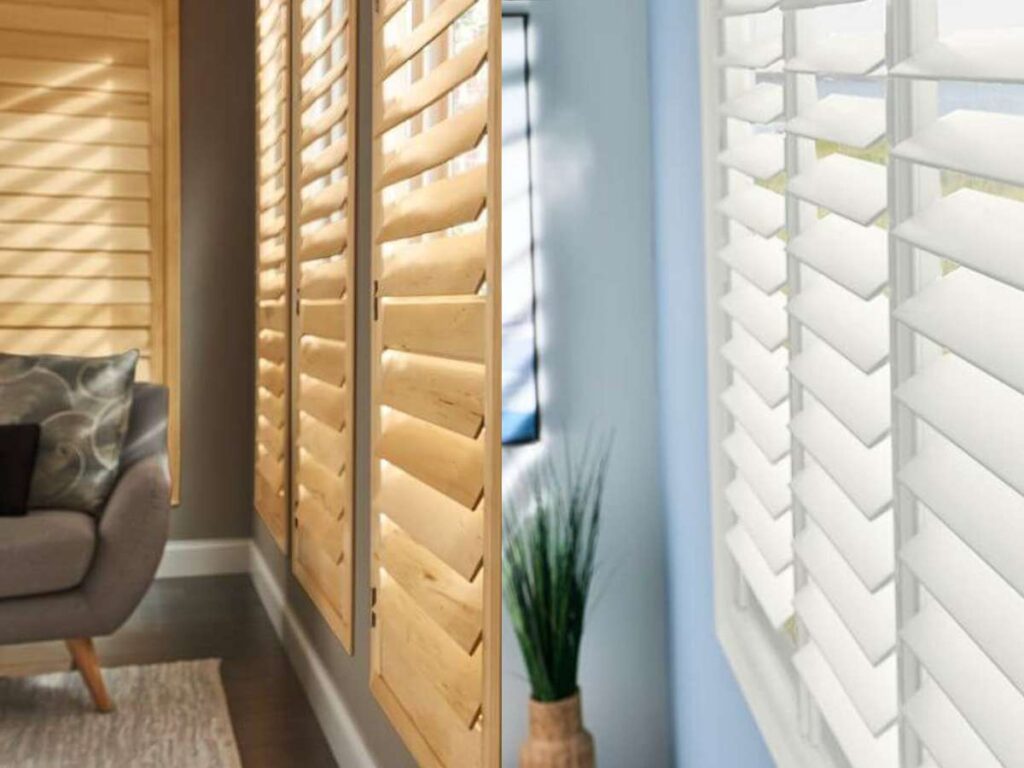
Shutters aren’t just decorative—they contribute to insulation, privacy, light control, and even energy efficiency. The materials behind them affect:
- Durability and longevity
- Resistance to moisture and warping
- Cost and long-term value
- Maintenance requirements
- Style and aesthetic appeal
- Suitability for different rooms (bathrooms, kitchens, coastal areas)
Understanding these factors helps you create a home you love without regrets later.
Wood vs. Composite Shutters: A Side-by-Side Comparison
Feature | Real Wood Shutters | Composite (Faux Wood) Shutters |
Material | Made from natural hardwood | Engineered wood core or solid composite materials |
Aesthetic Appeal | Warm, rich, natural grain; timeless style | Smooth, modern finish; replicates wood’s look |
Durability | Strong but can warp in humid areas | Highly resistant to moisture, warping, and cracking |
Maintenance | Requires gentle cleaning and care | Low-maintenance; easy to wipe clean |
Best Rooms | Living rooms, bedrooms, dining areas | Bathrooms, kitchens, laundry rooms, coastal homes |
Customization | Many stain and paint options; customizable louvers | Fewer stain options but wide selection of durable finishes |
Weight | Lightweight | Heavier than real wood |
Insulation | Good natural insulation | Excellent insulation due to dense material |
Cost | Higher price but adds premium value | Budget-friendly and long-lasting |
The Beauty of Real Wood Shutters
Authentic Warmth and Natural Style
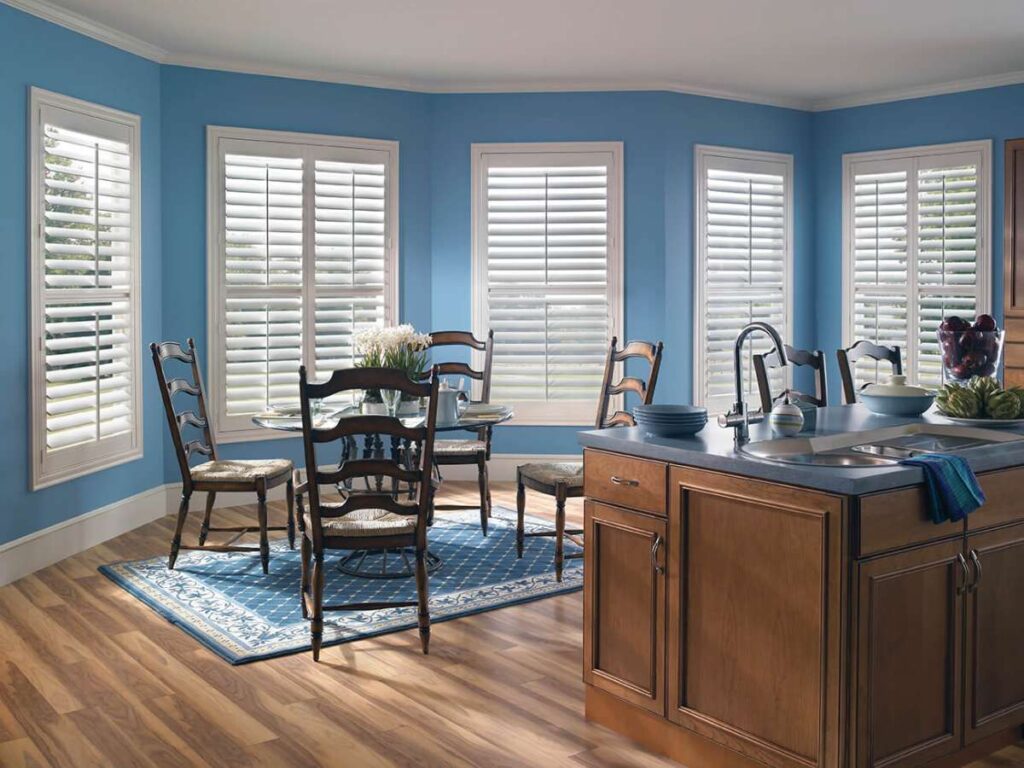
Real wood plantation shutters offer unmatched richness and elegance. Their organic texture and natural grain create a warm, inviting look that complements traditional, rustic, and upscale interiors.
Aesthetic strengths include:
- Gorgeous natural grain patterns
- Ability to take stain beautifully
- Lightweight feel that opens and closes easily
- High-end appeal that enhances home value
If your goal is timeless beauty with customizable finishes and louvers, real wood shutters remain the gold standard.
Insulation and Energy Efficiency
Wood is a naturally insulating material. It helps reduce heat loss in winter and heat gain in summer, contributing to better energy efficiency throughout your home.
This makes wood ideal for:
- Living rooms
- Bedrooms
- Large windows
- Areas where comfort matters most
When to Avoid Real Wood
While beautiful, wood shutters have limitations—especially in moisture-prone or humid areas.
Wood is not ideal for:
- Bathrooms
- Kitchens
- Laundry rooms
- Basements
- Coastal homes
In these locations, moisture can lead to warping, swelling, or fading over time.
The Advantages of Composite Shutters (Faux Wood)
Built for Tough Environments
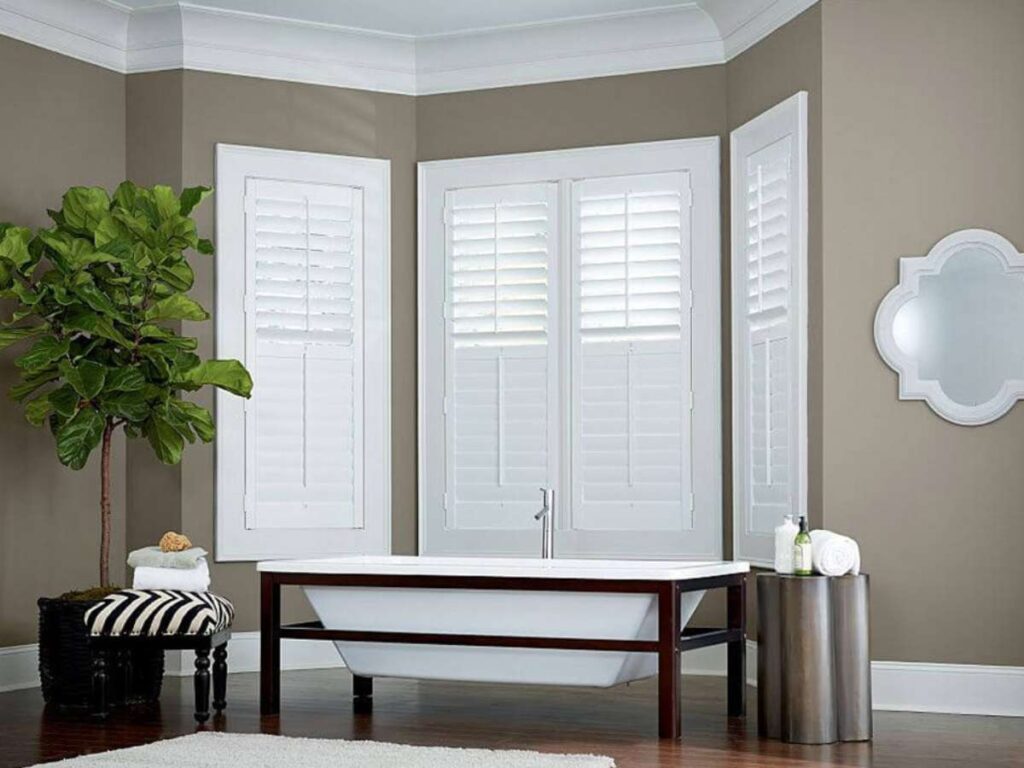
Composite shutters—sometimes called faux wood shutters—are engineered for durability.
They are resistant to:
- Moisture
- Humidity
- Warping
- Cracking
- Peeling
- Fading
This makes composite shutters the go-to option for bathrooms, kitchens, humid spaces, and coastal climates.
Low Maintenance and Long-Term Value
Composite shutters are incredibly easy to maintain. A simple wipe with a damp cloth keeps them clean, making them perfect for busy households.
Additional benefits include:
- Long-lasting finishes
- Excellent insulation
- Strong, dense construction
- Great performance for the cost
If you want shutters that can handle everyday wear and tear with minimal upkeep, composite is a practical and budget-friendly choice.
Slight Differences in Appearance
Composite shutters mimic the look of real wood but lack the depth and natural grain variations of authentic hardwood. For homeowners who prioritize premium aesthetics above all else, real wood still offers a more luxurious appearance.
Which Shutter Material Is Right for You?
Here’s a simplified way to decide:
Choose Real Wood If You Want:
- Classic, high-end beauty
- Lightweight construction
- Custom stain options
- A warm, natural aesthetic
Great for: living rooms, dining rooms, offices, bedrooms.
Choose Composite If You Need:
- Moisture resistance
- Long-term durability
- Easy maintenance
- Excellent insulation
- A cost-effective solution
Great for: bathrooms, kitchens, basements, laundry rooms, coastal areas.
Key Takeaways
- Wood vs. composite shutters comes down to environment, style, and budget.
- Real wood shutters offer unmatched beauty, custom finishes, and premium value.
- Composite shutters excel in humid areas and offer better durability with minimal maintenance.
- Your room’s moisture levels, design preferences, and budget will guide the best choice.
- Both materials offer excellent insulation and long-term appeal when matched properly to the space.
Frequently Asked Questions about Wood and Composite Shutters
1. Are wood shutters more expensive than composite shutters?
Generally, yes. Real wood shutters cost more due to premium materials and craftsmanship. However, many homeowners find the added aesthetic and resale value worth the investment.
2. Do composite shutters really hold up better in humid rooms?
Absolutely. Composite shutters resist moisture, warping, and cracking, making them ideal for bathrooms, kitchens, and coastal homes.
3. Which shutters are better for energy efficiency?
Both materials offer strong insulation. Composite shutters may have a slight advantage because their dense material can block more heat and cold, but wood shutters are also naturally efficient.
Ready to Choose the Right Shutters?
Ready to choose the perfect shutters for your home? Whether you’re weighing the beauty of real wood or the practicality of composite, expert guidance can make the decision easier. MITS Rockville helps homeowners understand their options and create window treatments that fit their style, comfort, and everyday living needs.
Explore your shutter options today—your windows will thank you.