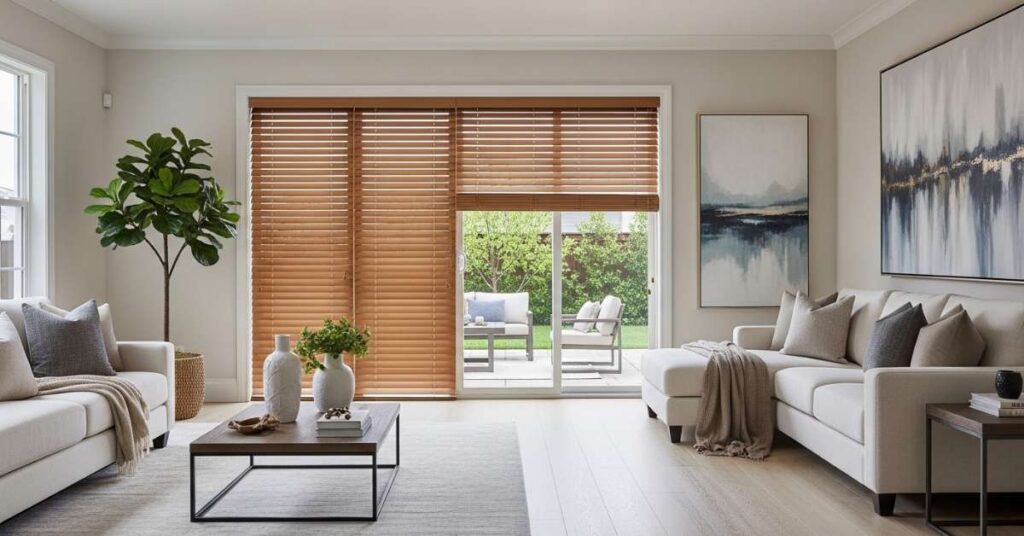
Faux wood blinds for sliding glass doors offer a practical way to manage light, privacy, and durability in high-traffic areas. The right selection depends on factors like orientation (vertical vs. horizontal), material quality, mounting style, and ease of operation. This guide breaks down what to look for so you can choose a solution that feels effortless to use while maintaining a clean, polished look.
Why Faux Wood Blinds Work Well for Sliding Glass Doors
Sliding glass doors bring in natural light, but they can also create glare, reduce privacy, and make temperature control inconsistent. Faux wood blinds are designed to handle these concerns while standing up to everyday use.
Key Benefits
- Moisture resistance: Faux composite materials are waterproof, making them ideal near patios or humid areas
- Durability: Stronger than natural wood, resisting warping or cracking
- Low maintenance: Easy to wipe clean compared to fabric treatments
Consistent appearance: Uniform finish across wide glass panels
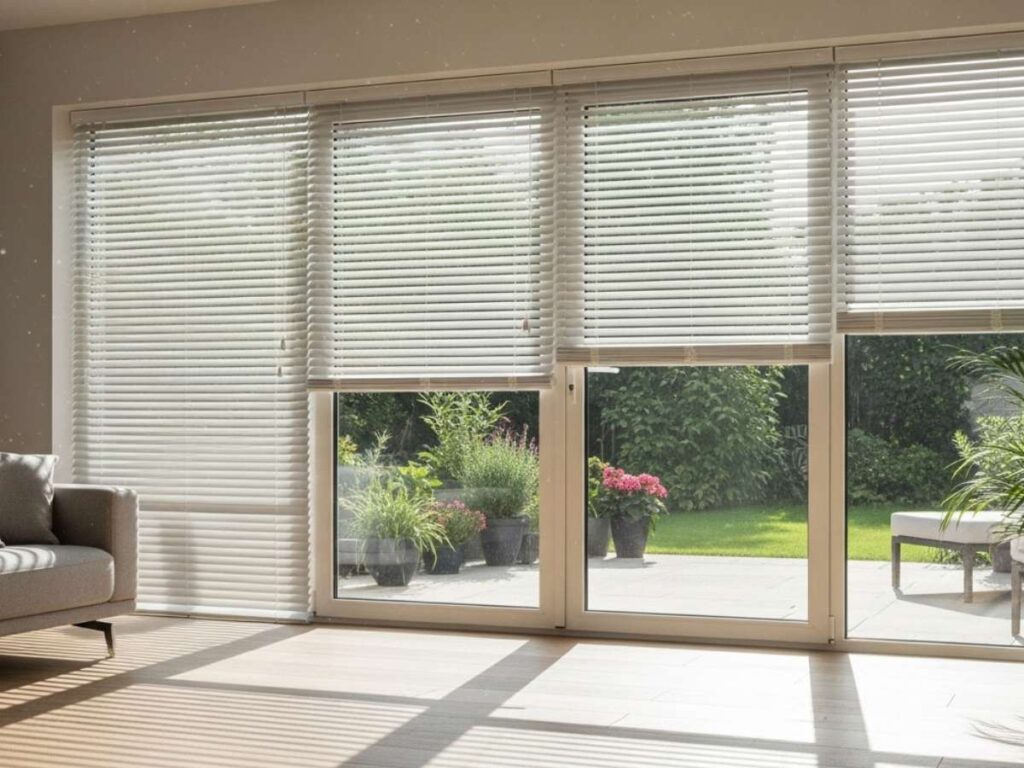
Vertical vs. Horizontal Blinds: What’s Better?
For sliding doors, orientation plays a big role in functionality.
Vertical Blinds (Most Recommended)
- Designed with vertical vanes or slats that glide along a track
- Easy side-to-side movement aligns with how sliding doors open
- Better coverage for wide patio openings
Horizontal Faux Wood Blinds
- Feature stacked slats that tilt for light control
- Work best when the door is not used frequently
- May require lifting to fully access the door
Pro Tip: Vertical faux wood-style panels or vanes are typically more convenient for everyday use on sliding glass doors.
Choosing the Right Material and Build
Not all faux blinds are created equal. The quality of materials directly affects how they perform over time.
What to Look For
- Composite construction: Ensures strength and resistance to bending
- UV-resistant finish: Blocks excessive sunlight and harmful UV rays that can fade furniture, flooring, and fabrics.
- Reinforced headrail and hardware: Supports wider spans without sagging
Smooth track system: Allows effortless sliding operation
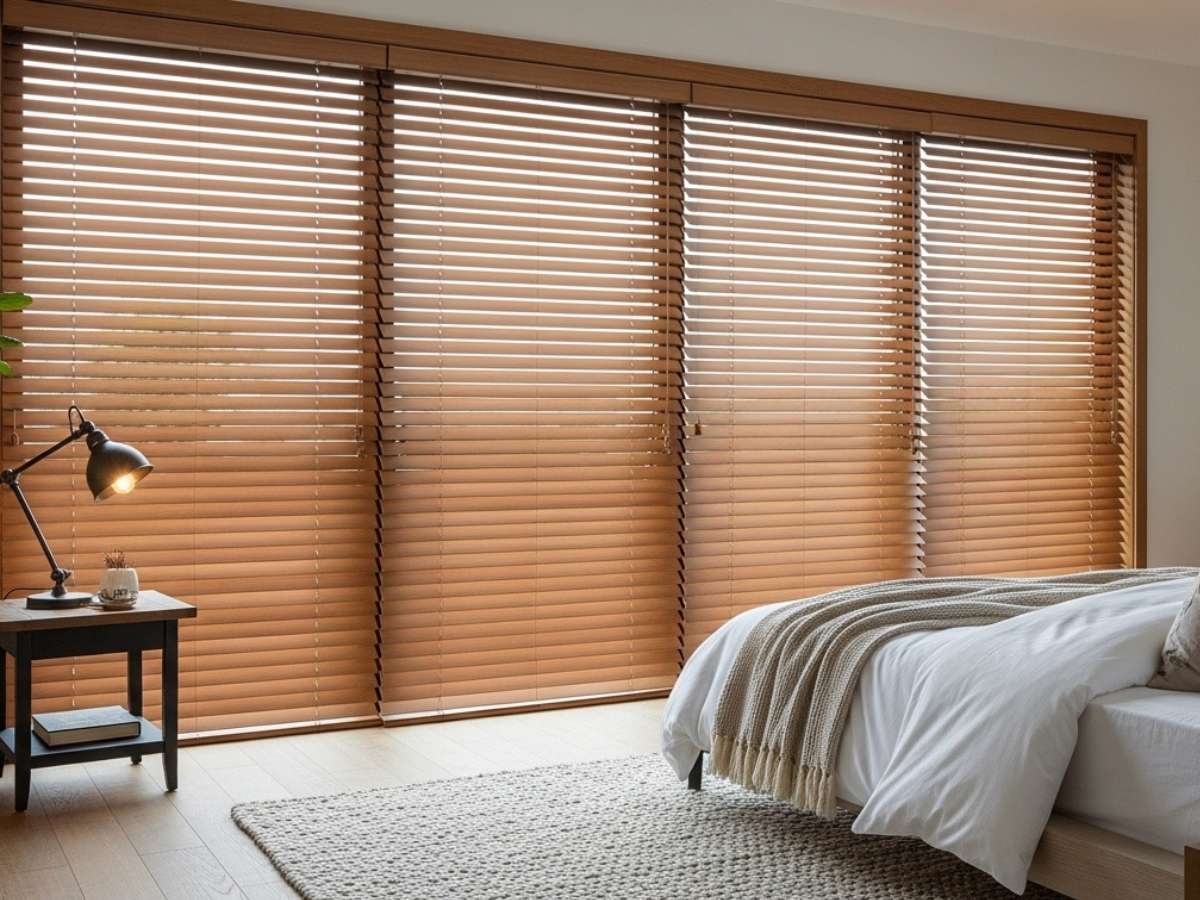
Important Features to Consider
1. Slat or Panel Size
Larger slats or panels provide a cleaner look and better visibility when open.
2. Mounting Style
- Inside mount: Sleek, built-in appearance
- Outside mount: Covers more of the window and improves privacy
3. Cordless or Wand Control
- Safer and cleaner appearance
- Easier operation for frequently used patio doors
4. Valance Design
A matching valance helps conceal the headrail and creates a more finished look.
Quick Comparison Table
Feature | Vertical Faux Blinds | Horizontal Faux Blinds |
Best for Sliding Doors | ✔ Yes | ⚠ Limited |
Ease of Operation | Smooth side-to-side | Lift and tilt required |
Light Control | Adjustable vanes | Adjustable slats |
Space Efficiency | Ideal for wide openings | Better for smaller windows |
Common Mistakes to Avoid
When selecting faux wood blinds for sliding glass doors, a few missteps can affect long-term satisfaction:
- Choosing horizontal blinds for high-traffic doors
- Ignoring the quality of the track and headrail system
- Selecting narrow slats that feel busy on large glass panels
- Overlooking mounting placement, leading to light gaps
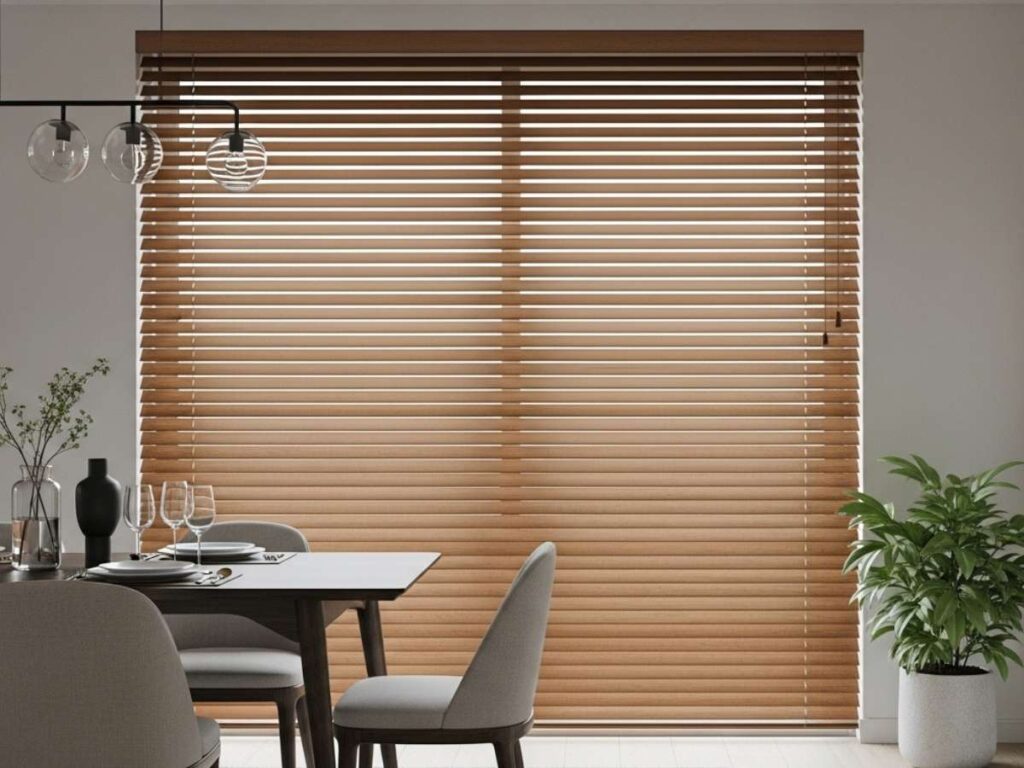
Customization Makes a Difference
Custom blinds ensure a better fit and smoother operation. With professionally measured and installed window treatments, you can expect:
- Proper alignment with your sliding door track
- Balanced movement across the entire span
- A tailored look that complements your interior design
Frequently Asked Questions
Are faux wood blinds suitable for sliding glass doors?
What is better for sliding doors: vertical or horizontal faux wood blinds?
Are faux wood blinds waterproof?
Can faux wood blinds block out light completely?
Do faux wood blinds require a lot of maintenance?
Final Thoughts
Choosing the best faux wood blinds for sliding glass doors comes down to balancing function and style. Vertical designs tend to offer the easiest operation, especially for patio doors that are used daily. Focusing on durable materials, smooth hardware, and the right mounting style helps create a solution that feels seamless over time.
A well-selected window treatment doesn’t just cover your glass—it makes the entire space more comfortable and easier to live in.
If your sliding glass doors feel too bright during the day or too exposed at night, the right blinds can make a noticeable difference. Connect with MITS Rockville for a personalized consultation and explore custom faux wood blinds designed to fit your space, your routine, and your style.